Anatomy & Physiology of Autonomic Nervous System for Yogic Science
What happens inside your body when you feel stressed—and what changes when you begin to relax? Explore the autonomic nervous system, which regulates involuntary functions such as heart rate and digestion. Dr. Vineeta Ketkar explains its anatomy and functions, helping you connect the body’s responses to stress and rest with your understanding of yoga. Through six hours of self-paced learning, discover how breath, posture and stillness relate to the nervous system, bringing greater clarity to your practice and teaching. #yoga programs #Health wellness courses #Yoga therapy courses #Emotional intelligence courses #Mental health courses

Program Overview
Understand the Body’s Responses to Stress and Rest
Explore the two major divisions of the autonomic nervous system: the sympathetic and parasympathetic systems. Often described as “go” and “rest,” these systems work together to help the body respond to activity, challenge, recovery and everyday needs. Develop an understanding of how they are organised, how they communicate with internal organs and why their functions matter in daily life.
See What Stress Does Inside You
Stress is more than a feeling in the mind. It can be accompanied by changes in heart rate, breathing, digestion and muscular tension.
This program helps you connect the experience of stress with the body’s physiological responses, creating a foundation for understanding why a person’s internal state matters during yoga practice.
Explore Yoga Through the Lens of Anatomy
Breath, posture and stillness are integral to classical yoga. Studying them alongside modern anatomy offers a deeper way to understand their place in practice.
Explore the relationship between these yogic tools and autonomic function, while recognising that responses can vary with the individual, the practice and the context.
Bring Understanding to Your Practice and Teaching
Move beyond following instructions towards understanding the reasoning behind a practice. For teachers and therapists, this anatomical perspective can support more thoughtful observation, clearer explanations and informed choices. For practitioners, it offers an opportunity to become more attentive to the body’s responses.
What You Will Learn
- Understand the structure and functions of the autonomic nervous system.
- Explore the roles of the sympathetic and parasympathetic divisions.
- Recognise how stress affects internal bodily functions.
- Examine breath, posture and stillness through modern anatomy.
- Bring deeper understanding to yoga practice and teaching.
Who Is This Program For?
This program is designed for yoga teachers, yoga therapists and curious practitioners who wish to strengthen their understanding of the body and explore the relationship between anatomy and yoga.
Study at your own pace, connect anatomy with experience, and bring greater clarity to the way you practise and teach yoga.
Course Curriculum
Six Days Anatomy & Physiology of Autonomic Nervous System for Yogic Science
6 Learning Materials
Anatomy - Lecture 1: Organization & Distribution of ANS
Organization & Distribution of ANS
Anatomy - Lecture 2: Structure of sympathetic & Parasympathetic System
Structure of sympathetic & Parasympathetic System
Physiology - Lecture 1: Spectrum of Actions of ANS
Spectrum of Actions of ANS
Physiology - Lecture 2: Higher Control of ANS & Visceral Reflexes
Higher Control of ANS & Visceral Reflexes
Yogic Application: Ashtanga Yoga & Hatha Yoga
Yogic Application Ashtanga Yoga & Hatha Yoga - Part - 1
Yogic Application Ashtanga Yoga & Hatha Yoga - Part - 2
Schedule
| Day | Time | Title |
|---|---|---|
| 09-05-2026 | 10:00 PM | Rising infertility trends & its societal impact |
| 10-05-2026 | 08:00 PM | Understanding fertility and Infertility—Male & Female |
| 23-05-2026 | 10:00PM - 11:00PM | Garbha sambhava samagri - Essentials of Conception |
| 24-05-2026 | 08:00 PM | Conclusion—case discussions |
Meet Our Mentors
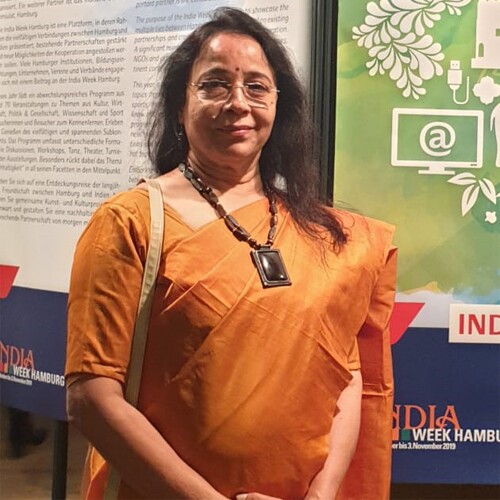
Dr. Vineeta Ketkar
Dr. Vineeta Ketkar has been a practicing Family Physician in Pune since 1980. With over 40 years of clinical experience, She also offers a range of Yogic Health Services and Yoga training programs at her well-equipped Yoga Institute, since 2006. Dr. Ketkar holds an MBBS from Mumbai University and has received her training for 14 years under Dr. S.V. Karandikar and 10 years under Guruji B.K.S. Iyengar.Her approach to handling cases is mainly conservative, aiming to identify the root cause. In the journey to uncovering the cause, she became fascinated by Yogic Health Science, which she practiced for her own health.She has significant data that shows the effectiveness of Medical Yogatherapy for palliation & restoration in degenerative musculoskeletal disorders. In the case of psychosomatic disorders, she has found that MYT effectively addresses stress-related factors such as Bronchial Asthma, Hypertension, Diabetes Mellitus Type II, Coronary artery disease, Acid peptic Disease, Irritable bowel Syndrome.She has also authored 2 books: “Rope and Belt Therapy for Painful Knee Osteoarthritis” and “Rope and Belt Therapy for Spondylosis & Disc Disease.”Frequently asked questions
What is the Anatomy & Physiology of Autonomic Nervous System for Yogic Science program?
What will I learn during the program?
Who is this program for?
Yoga teachers, yoga therapists, practitioners and anyone interested in the connection between anatomy and yoga.
What are the sympathetic and parasympathetic nervous systems?
They are two major divisions of the autonomic nervous system that help regulate the body's responses to activity, stress and recovery.
How does stress affect the autonomic nervous system?
Stress can influence bodily functions such as heart rate, breathing, digestion and muscular tension.
How can I enrol in the program?
You can enrol through the official course page to access the self-paced learning materials. You also get access to the recordings forever.
Can I get my fee refunded?
Testimonials
It was a very meaningful session, with special thanks to Dr. Vineeta Ketkar ji for keeping the content simple, clear, and to the point. Sincere appreciation to the organizing team as well for their smooth coordination and efforts.
~Mamta Bisht, IndiaBy clicking on Continue, I accept the Terms & Conditions,
Privacy Policy